

Pacific Bonsai Museum (Out of Many, One display)
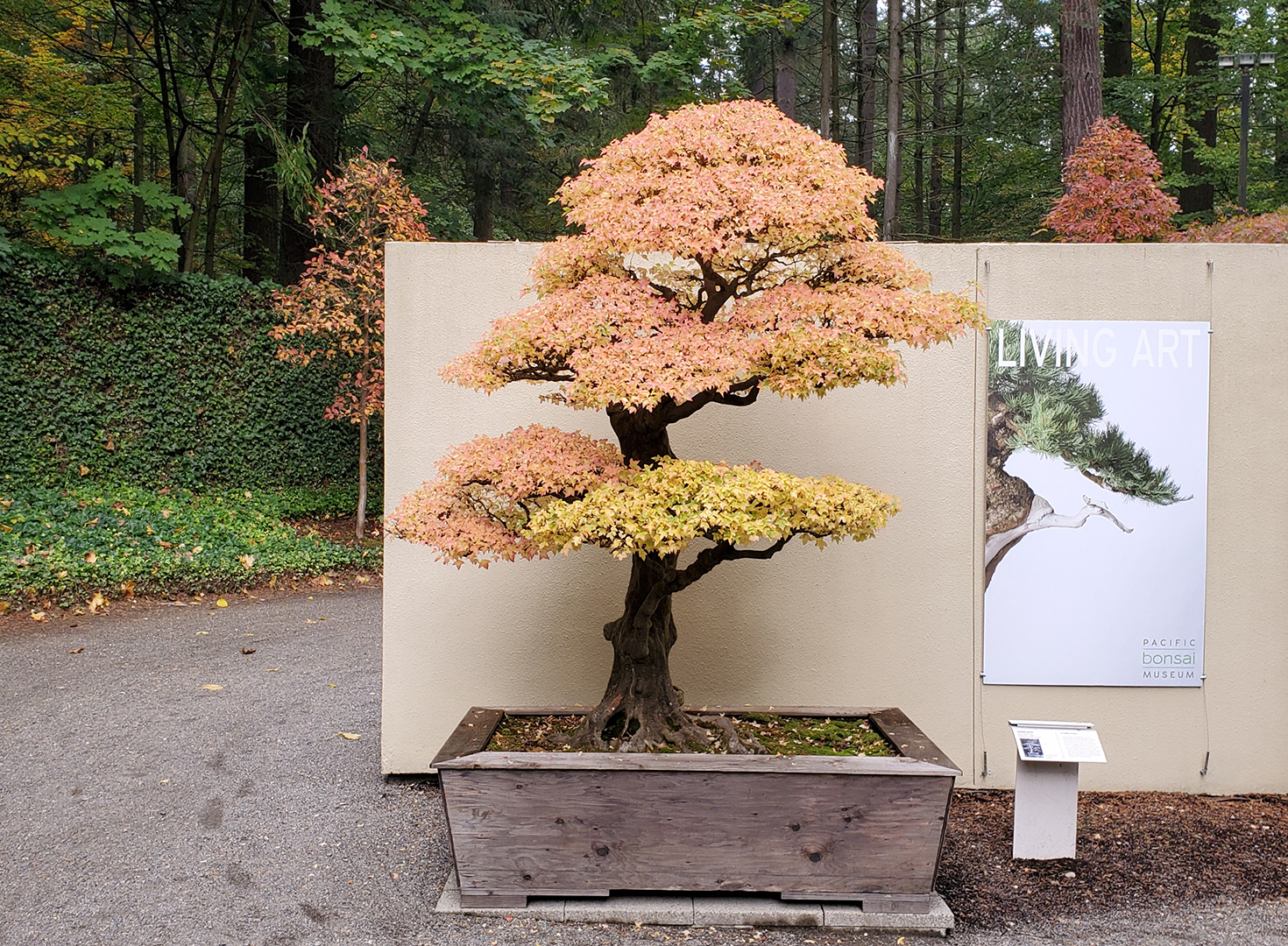
Domoto Trident Maple
This trident maple is approximately 210 years old, born in Japan around 1815. It traveled to San Francisco for the 1915 Panama Pacific International Exposition, displayed on the verandah of the Formosa Tea House. After the fair, pioneering Hayward, California nurseryman Kanetaro Domoto acquired it and later passed it to his son, Toichi, who became a renowned bonsai artist.
During World War II, the Domoto family was forcibly removed to incarceration camps following Executive Order 9066. The tree was left behind for three years in the care of a nursery employee, Peter Milan, who kept the business running under difficult circumstances. Neglecting to receive the daily care and attention bonsai require, it burst through its wooden planter and rooted into the ground to survive. When Toichi returned, he spent decades nursing the tree back to health, caring for it into his 80s. In 1989, after seeing it turn to autumn colors one last time, Toichi sent it on long-term loan to the Pacific Rim Bonsai Collection (now Pacific Bonsai Museum). His children Marilyn and Douglas officially donated this family heirloom to the museum in 2015.
Toichi once said, “When you are working with plants and flowers, you cant have hate in your heart.”
How it represents the community’s American experience:
The Domoto Maple’s journey mirrors a broader American story of immigration, loss, resilience, and renewal. It arrived in America for display at a historic Worlds Fair, celebrating progress and possibility. It was shaped by a Japanese American family building a life through hard work and artistry despite racist policies that made it challenging to run a business. It survived the injustice of wartime incarceration. And it was painstakingly restored by a man who chose not to let bitterness take root in his heart.
For Pacific Bonsai Museum, located in the Pacific Northwest where Japanese American communities were uprooted during World War II, this tree connects visitors to history that shaped our region. It represents not only what was lost, but what endured—and the care, patience, and reconciliation required to keep living things alive across generations.
On display at the Pacific Bonsai Museum, Tuesday–Sunday, 10 a.m.–4 p.m.