

Moses Lake Museum & Art Center (Out of Many, One display)
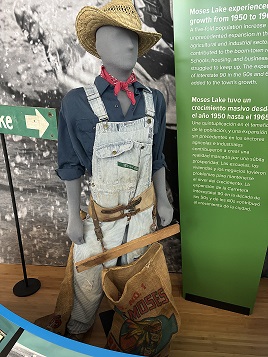
Potato Picker Belt
In the early and mid-20th century, Grant County farmers relied on potato picker belts during harvest. Before mechanized harvesting became common in the 1960s, potatoes were dug and collected entirely by hand. Workers wore these belts, which held extra burlap sacks on hooks along the sides. As they filled each sack, dragging it between their legs until it reached about 60 pounds, then they would grab another from the belt and continue the process. This system allowed farmworkers to keep moving efficiently across the fields, long before machines transformed the harvest.
How it represents the community’s American experience:
The potato picker belt symbolizes the physical labor that is behind much of American agricultural success. It highlights the essential, hands-on work required to feed the nation. The belt represents the diversity of the American workforce and how new Americans have long contributed to economic survival and growth, often under grueling conditions. Potatoes were central to Grant County’s transformation from arid land to an agricultural powerhouse. After irrigation from the Columbia Basin Project began in 1948, potatoes became a leading crop, driving economic growth, attracting settlers, and creating jobs in farming and processing. Today, Grant County produces more potatoes per acre than any other U.S. County, making them vital to the region’s identity and economy.
On display at the Moses Lake Museum & Art Center, Monday–Friday, 10 a.m.–5 p.m. & Saturdays, 10 a.m.–4 p.m. January–December 2026.