Week 22: June 1-7
June 1887
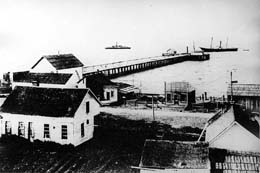
The Puget Sound Co-operative Colony moved its headquarters to the small settlement of Port Angeles on the Olympic Peninsula, where its founders envision building an ideal collective community. Dozens of adherents were already living at the colony site on Ennis Creek. By fall, some 400 colonists would have doubled Port Angeles’s population. The colony was the first of many utopian communities that would emerge around Puget Sound over the next 30 years, and the only one that played a significant role in building a major city.
June 1855
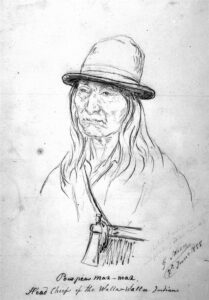
The first Walla Walla treaty council took place near present-day Walla Walla in the late spring of 1855. Tensions were high, for the tribes sensed what was to take place. Opposition to treaties was greatest among the Cayuses, Walla Wallas, and Yakamas. A chief of the latter group, Kamiakin, was a lead instigator in focusing Native American resistance to the surrender of their lands. The Walla Walla chief, Peo-Peo-Mox-Mox, was another leader who was extremely concerned. The Nez Perce, also present at the council, were divided, with Chief Lawyer essentially in favor of a treaty, and another chief, Looking Glass, opposed.
June 5, 2013
On this day, about 50 people gathered at Everett’s Legion Park Overlook, 145 Alverson Boulevard, to dedicate signs honoring the Native people who once inhabited the site and describing life in and around Hibulb Village, which stood for generations on the beach below the bluff where the signs are installed.
Three signs tell the story: “The Overlook: Eye of the Region,” “Hibulb Village: Heart of the Region,” and “The River: Lifeblood of the Region.”
June 6, 1870
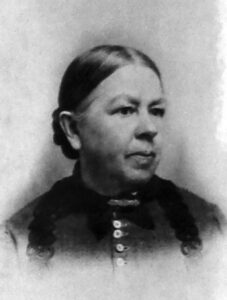
On this day, Charlotte Emily Olney French, after a debate with the election judges, cast her vote in a Washington territorial election, the first woman to do so. Six more women at her Grand Mound precinct in south Thurston County also voted that day. Eight women at the Black River precinct, a few miles north, got the news and added their votes for a total of 15 approved ballots by women.
The women based their arguments on recently enacted legislation sponsored by Edward Eldridge, which struck the word “male” from the voting laws.
June 7, 1910
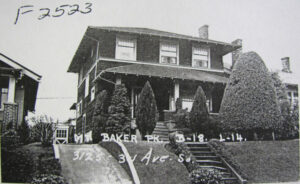
On this day, Judge Boyd J. Tallman of the Supreme Court of Washington State upheld the ruling that Samuel Stone and his wife, Susie Stone, a Black couple, could purchase property in the exclusive Mount Baker Park District of Seattle. The developer of the district, Hunter Tract Improvement Company, had filed suit against the Stones and the former owner of the lot to reverse the purchase contract. Due to the couple’s race, the company claimed the presence of the Stones could compromise the real estate value of the surrounding lots. After winning the original court case and the appeal, the Stones proceeded to build their home at 3125 34th Avenue S.
This post is in partnership with HistoryLink, and Warren Seyler, former chairman Spokane Tribe of Indians, the Black Muse Resource Center, and the Living Arts Cultural Heritage.
We encourage you to engage in further research through your local historic societies, museums, archives, and community.