This Week in Washington History – Week 23

This Week in Washington History – Week 23

Week 23: June 8-14

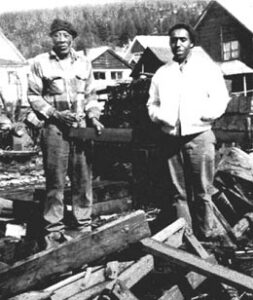
Samuel Lawrence Craven (1895-1969) with son, William Amos Craven (right), Roslyn, ca. 1960 Courtesy Ellensburg Public Library Local History Collection

June 10, 1975

On this day, William Craven, a school janitor, became the state’s first black mayor when the city council of this Cascade Range coal town unanimously appointed him to the vacant mayoral post. He then ran for the post during the next election and won in a landslide. He served until 1979.

Roslyn’s population had once been 22 percent African American, after 300 black miners had been brought to town as strikebreakers in 1888 and 1889. By 1975, except for Craven’s family, Roslyn had only one other black resident

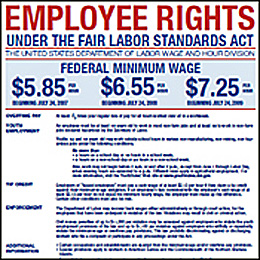
U.S. Department of Labor poster showing $7.25 federal minimum wage effective as of July 24, 2009, and earlier federal minimum wage levels, 2007

June 11, 1959

On this day, the Washington Minimum Wage and Hour Act went into effect, setting the state minimum wage for most workers at $1 an hour. Small increases would be made to the minimum wage over the years until 1988, when voters approved a large increase, making Washington’s minimum wage the highest in the nation. Another rate hike occurred in 1998, and later adjustments for inflation followed.

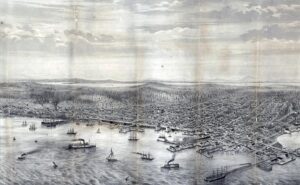
Looking east, bird's-eye view, Seattle, 1878 Map by Eli Sheldon Glover, Courtesy UW Special Collections (MAP119)

June 12, 1886

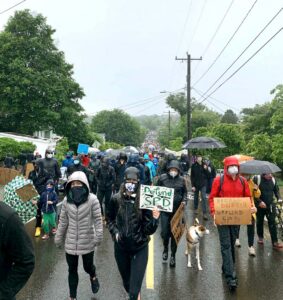
March of Silence march, near 23rd Ave S and S College St, Seattle, June 12, 2020 Courtesy Seattle Public Library (spl_cvd_00018_008)

June 12, 2020

On this day,  Black Lives Matter Seattle-King County called for a statewide day of action that included a March of Silence and a general strike.

The protest is one of scores held across the nation following the murder of George Floyd, a 46-year-old Black man killed during an arrest by Minneapolis police officers on May 25, 2020. The Seattle march honored Floyd and others who lost their lives to police brutality and sent a message to government leaders that systemic racism must end.

An estimated 60,000 people braved steady rain to walk the 1.9 miles from Judkins Park in the Central District to Jefferson Park on Beacon Hill. 

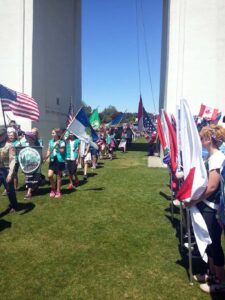
Procession through Peace Arch, Blaine, June 14, 2015 HistoryLink photo by Phil Dougherty

June 14, 2015

This post is in partnership with HistoryLink, and Warren Seyler, former chairman Spokane Tribe of Indians, the Black Muse Resource Center, and the Living Arts Cultural Heritage. 

We encourage you to engage in further research through your local historic societies, museums, archives, and community.

Share this post

Related Post

Week 22 of our year in significant events throughout our state’s history....
Week 21 of our year in significant events throughout our state’s history....
Week 20 of our year in significant events throughout our state’s history....