Week 19: May 11-17
May 11, 1792
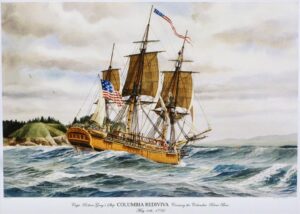
On this day, American fur trader Robert Gray entered the major river of the Pacific Northwest in his ship, the Columbia Rediviva. Indian peoples had lived and navigated along Wimahl (“Big River”) for tens of thousands of years, and Europeans had been sailing the Northwest Coast for more than 200 years. However, Gray was the first non-Indian to succeed in entering Wimahl, which he renamed the Columbia River after his ship.
May 13, 1977
On this day, the Daybreak Star Indian Cultural Center opened its doors in Discovery Park, located in Seattle’s Magnolia neighborhood. Founded by the Native American leader Bernie Whitebear, with the United Indians of All Tribes Foundation as its parent organization, the Daybreak Star Center would serve as an “urban base for Native Americans in the Seattle Area,” by providing invaluable cultural, educational, and social services to local Native American communities.
May 14, 2005
On this day, the Lao Highland Community Center, a project of the Lao Highland Association, opened in southeast Seattle near the Othello Playground. The community center was the first of its kind and resulted from the joint efforts of Hmong, Mien, and Khmu people, all immigrants from Laos. The center offers programs for youth and the elderly and actively works to preserve the unique and varied heritage of the people of the Hill Tribes of Laos.
May 16, 1942
On this day, Gordon Hirabayashi, a University of Washington senior, Quaker, and conscientious objector, drove with his attorney to the Seattle FBI office and challenged the Army’s exclusion orders from the West Coast, orders which applied to all Japanese Americans and to their immigrant elders.
To comply with these orders, which he believed were based upon racial prejudice and represented a violation of the United States Constitution and the rights of citizens, this principled American-born citizen of Japanese descent wrote as part of a four-page statement: “I would be giving helpless consent to the denial of practically all of the things which give me incentive to live.”
May 17, 1999
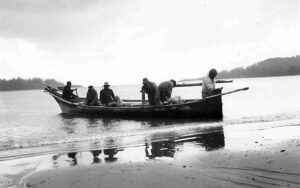
On this day, for the first time in more than 70 years, Makah whalers successfully hunted a gray whale in the waters off the Olympic Peninsula, where their ancestors hunted whales for thousands of years. Killing the whale unleashed a storm of protest from animal rights activists who have worked in court and on the open seas to stop the Makah from whaling, but Makah leaders see the successful hunt as a further step in revitalizing their culture. Makah families hunted whales again in 2000, without success, and then court decisions put the revived whaling on hold.
May 17, 1858
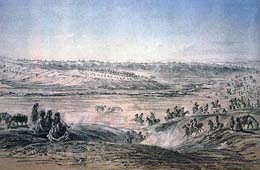
On this day, Yakama, Palouse, Spokane, and Coeur d’Alene Indians attacked a column of U.S. Army troops under the command of Lieutenant Colonel Edward Steptoe. The year 1858 was a time of high tension in the Inland Northwest, as wary Native Americans faced the oncoming encroachment of Euro-Americans in ever greater numbers, including miners, farmers, and stock raisers who had their eye on lands that were the ancestral homes of the tribes.
Steptoe’s failure in his foray into the heart of Indian lands temporarily gave hope to the Indians, but a punitive invasion by Colonel George Wright, several months later, resulted in military defeat and oppression.
This post is in partnership with HistoryLink, and Warren Seyler, former chairman Spokane Tribe of Indians, the Black Muse Resource Center, and the Living Arts Cultural Heritage.
We encourage you to engage in further research through your local historic societies, museums, archives, and community.