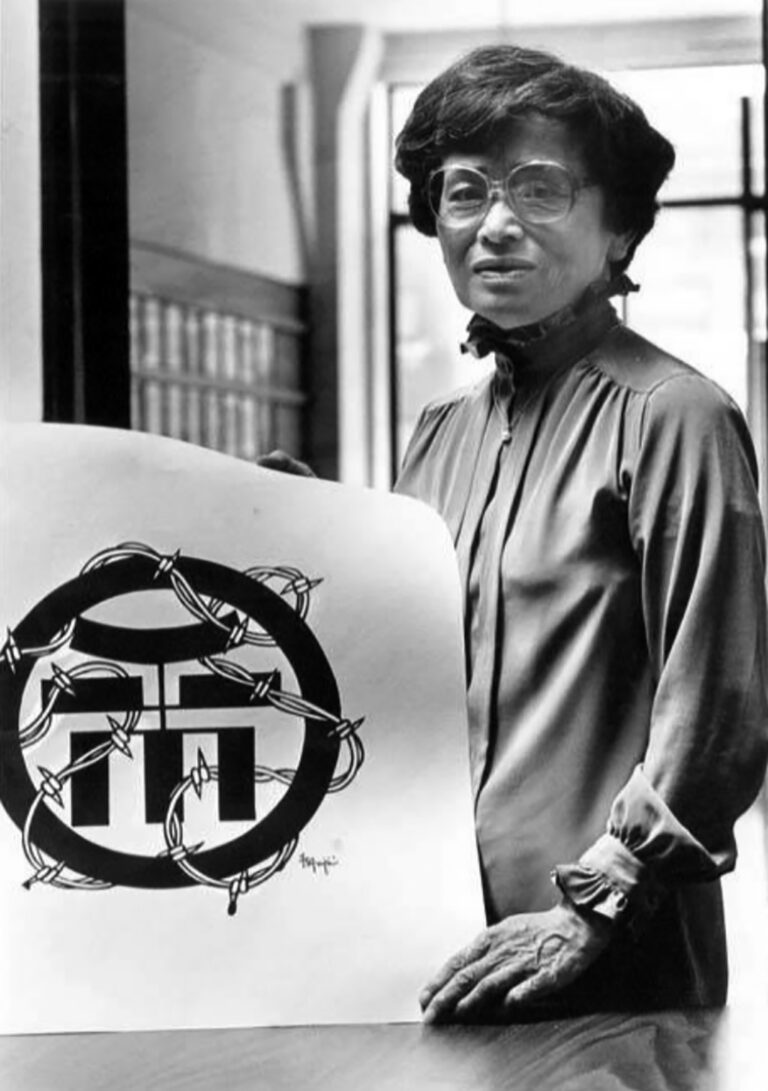
Cherry Kinoshita holding symbol of Japanese American incarceration, Seattle, July 22, 1988
Courtesy MOHAI (2000.107.105.35.01)
November 25, 1978
On this day, a gathering of more than 2,000 people commemorated the wartime incarceration of Japanese Americans at the first Day of Remembrance program, held at the Western Washington Fair grounds in Puyallup.
On February 19, 1942, President Franklin D. Roosevelt signed Executive Order 9066 authorizing the removal of more than 120,000 Japanese Americans from the West Coast, including nearly 13,000 persons from Washington state. In the 1980s, the Commission on Wartime Relocation and Internment of Civilians determined that the Nikkei incarceration resulted from long-standing prejudices against Japanese immigrants and their families, not any evidence that they posed a risk to the United States.
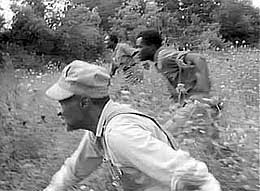
Scene from Nothing But a Man, 1964, shown in Seattle's first black film festival, 1968
November 28, 1968
On this day, Seattle’s first Black Film Festival opened for a four-day run. More or less organized as a fundraising event, the festival is designed to benefit a proposed filmmaker’s workshop through CAMP, the Central Area Motivation Project.
Two complete shows were held each evening, at 7 and 9:30 p.m., at CAMP headquarters, located at 722 18th Avenue. Tickets were $1 at the door.
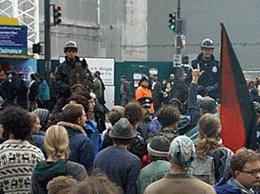
WTO protests, 7th Avenue and Pike Street, Seattle, Monday, November 29, 1999
Courtesy HistoryLink.org
November 29, 1999
On this day, three large demonstrations rallied against World Trade Organization policies. In the afternoon thousands of protestors marched through downtown Seattle to denounce WTO “free trade” rules as harmful to the environment and animal welfare. In the evening two marches converged on the Stadium Exhibition Center south of downtown, where WTO delegates are attending the conference’s opening reception. Several hundred steelworkers and other union supporters protesting the WTO’s labor policies joined thousands organized by the Washington Association of Churches. They successfully formed a human chain around the Exhibition Center to call on world leaders to cancel the debt owed by poor countries to international banks.
This post is in partnership with HistoryLink, and Warren Seyler, former chairman Spokane Tribe of Indians, the Black Muse Resource Center, and the Living Arts Cultural Heritage.
We encourage you to engage in further research through your local historic societies, museums, archives, and community.