ACLU Banner at a community gathering in 2023. Image courtesy of ACLU Washington.
July 1935
The American Civil Liberties Union (ACLU) established a chapter in Seattle in July of 1935. The group started work by defending the organizing rights of labor unions and obtaining injunctions against the Washington State Patrol to prevent interference with peaceful picketing. A committee of supporters had been sporadically active in Seattle since 1920, and the ACLU had won important civil rights cases in Washington state.
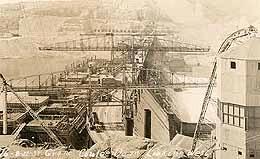
Construction cranes on Grand Coulee Dam, 1930s
Postcard
July 16, 1933
On this day, construction began on the Grand Coulee Dam, which would ultimately create the 180-mile-long Lake Roosevelt, produce 6809 MW of electricity, and irrigate more than 667,000 acres of land.
Grand Coulee Dam, hailed as the “Eighth Wonder of the World” when it was completed in 1941, is as confounding to the human eye as an elephant might be to an ant. It girdles the Columbia River with 12 million cubic yards of concrete, stacked one mile wide and as tall as a 46-story building, backing up a 150-mile-long reservoir, spinning out more kilowatts than any other dam in the United States. However, the social and environmental costs have been so severe, according to a study released in 2000, that Grand Coulee probably could not be built today.
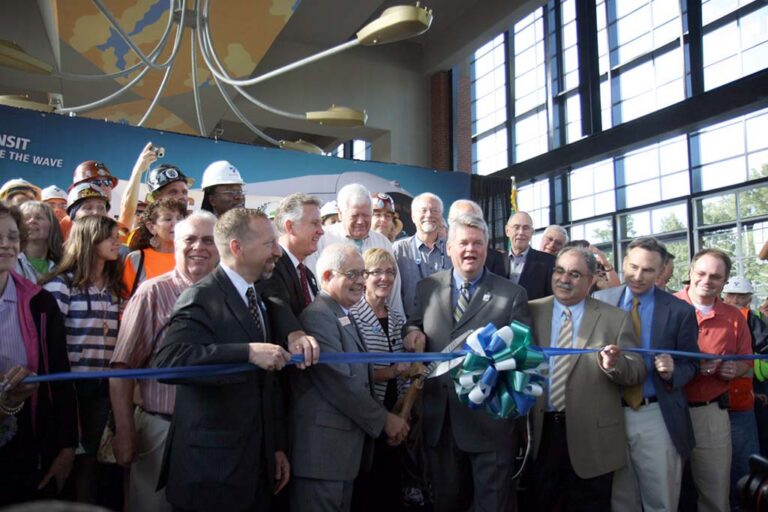
Link light rail ribbon-cutting ceremony, Mount Baker Station, Seattle, July 18, 2009 Courtesy Sound Transit
July 18, 2009
On this day, Seattle’s light-rail era began as Sound Transit’s Link light-rail trains carried their first passengers between downtown Seattle and Tukwila in south King County. The event, anticipated for decades, was celebrated with a ribbon-cutting ceremony at Sound Transit’s Mount Baker Station in the Rainier Valley neighborhood, presided over by Seattle Mayor and Sound Transit board chair Greg Nickels.
About 45,000 people rode the light-rail trains on the first day. The 14-mile line is known as the Central Link, and it runs between Tukwila and downtown Seattle’s Westlake Center Station.
This post is in partnership with HistoryLink, and Warren Seyler, former chairman Spokane Tribe of Indians, the Black Muse Resource Center, and the Living Arts Cultural Heritage.
We encourage you to engage in further research through your local historic societies, museums, archives, and community.