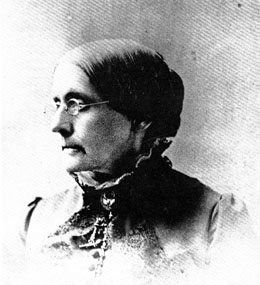
On this day, Susan B. Anthony, national women’s rights leader and vice president of the National Woman Suffrage Association, became the first woman to address the Washington Territorial Legislature. Nine days after Anthony’s speech, she helped organize the Washington Woman Suffrage Association.
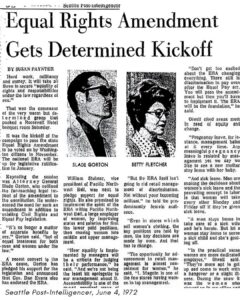
On this day, Governor Daniel Evans convened the Washington State Women’s Council. Its mission is “To consider appropriate questions about the rights and needs of women in contemporary America and to make recommendations to the Governor and State agencies with respect to desirable changes in program and law.”
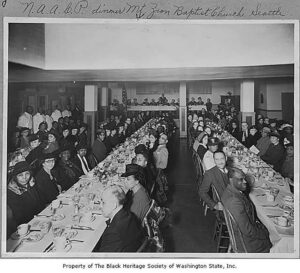
NAACP dinner, Mount Zion Baptist Church, Seattle, 1940s
Courtesy The Black Heritage Society of Washington State, Inc. (2001.14.2.32A)
October 23, 1913
On this day, the Seattle Branch of the National Association for the Advancement of Colored People (NAACP) was founded. It became the first national civil rights organization established in the city. Letitia Graves, a beautician, was elected president. Eight of the 14 founders were women.
The NAACP was founded on February 12, 1909. The Seattle branch was one of the earliest branches formed west of the Mississippi River.
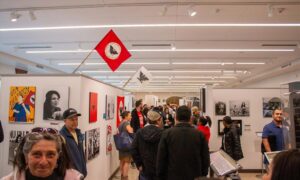
Sea Mar Museum opening, October 2019
Courtesy Sea Mar Museum Collection
October 24, 2019
On this day, the Sea Mar Museum of Chicano/a/Latino/a Culture opened to the public, using artifacts, photos, art, and videos to showcase the history and culture of the state’s Spanish-speaking communities. It is the first and only Latinx museum in the state. More than 1,000 people attend opening-day festivities in the 8,500-square-foot museum, located on the ground floor of a new two-story building in South Park that also houses an adolescent-health clinic, rental space for community gatherings, and a Spanish-language radio station.
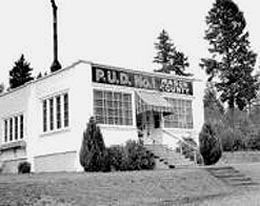
Mason County Public Utility No. 1, first PUD established after passage of 1930 Power and Water Districts Act, ca. 1936
Courtesy Mason County PUD No. 1
October 25, 1928
On this day, the Washington State Grange and its allies filed with the Secretary of State an initiative to the legislature to authorize the creation of public utility districts (PUDs) to provide electrical power and water service to unincorporated areas of the state. Both Seattle and Tacoma have municipally-owned electrical and water utilities created earlier in the century, but unincorporated rural areas remained at the mercy of private utility companies, many of which were owned by national conglomerates widely viewed as insensitive to the public’s needs.
This post is in partnership with HistoryLink, and Warren Seyler, former chairman Spokane Tribe of Indians, the Black Muse Resource Center, and the Living Arts Cultural Heritage.
We encourage you to engage in further research through your local historic societies, museums, archives, and community.